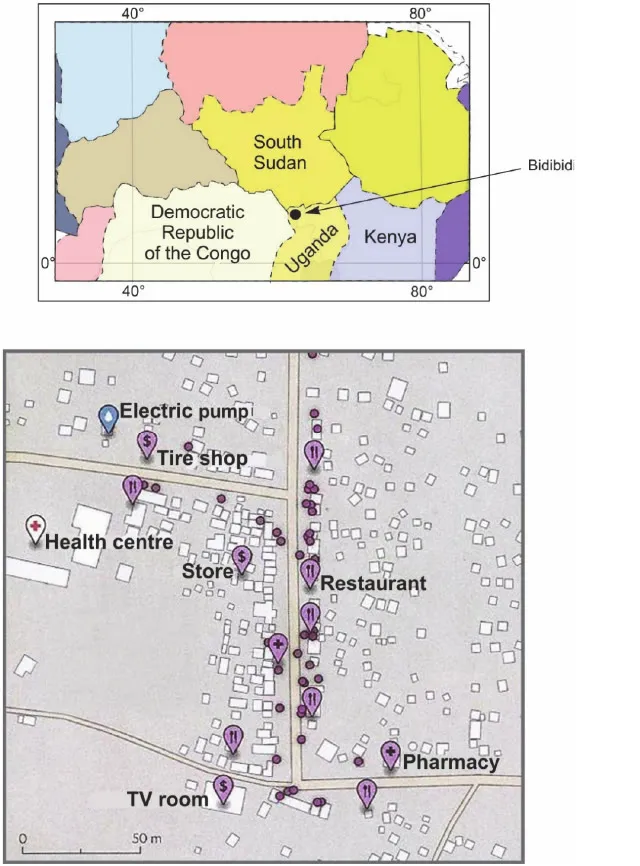
The map shows the location of one of the refugee settlements in northern Uganda, and the plan based on satellite images presents part of this settlement. Information about this settlement is given in the source text below.
In many camps around the world, refugees live crammed in tents, makeshift barracks or containers. They are often restricted by laws that prevent them from working and moving outside the camps.
Until recently, the area occupied by the Bidibidi was covered by forest. According to satellite photos, a quarter of a million refugees from South Sudan live there now. It is one of the largest refugee settlements in the world. It was opened in 2016, and almost immediately about 6,000 people a day began to arrive there.
Uganda implemented a programme to encourage the development of refugee hosting areas. Schools and health centres there are made of brick and have glass windows.
There is fresh water in the taps, street lamps are powered by solar panels, music is broadcast on the radio, football matches are screened on TV in community centres, and mobile phone charging stations are available in shops. Unlike many refugee camps that are isolated and fenced, Bidibidi almost blends in with its surroundings.
Source: National Geographic 4/2019.